
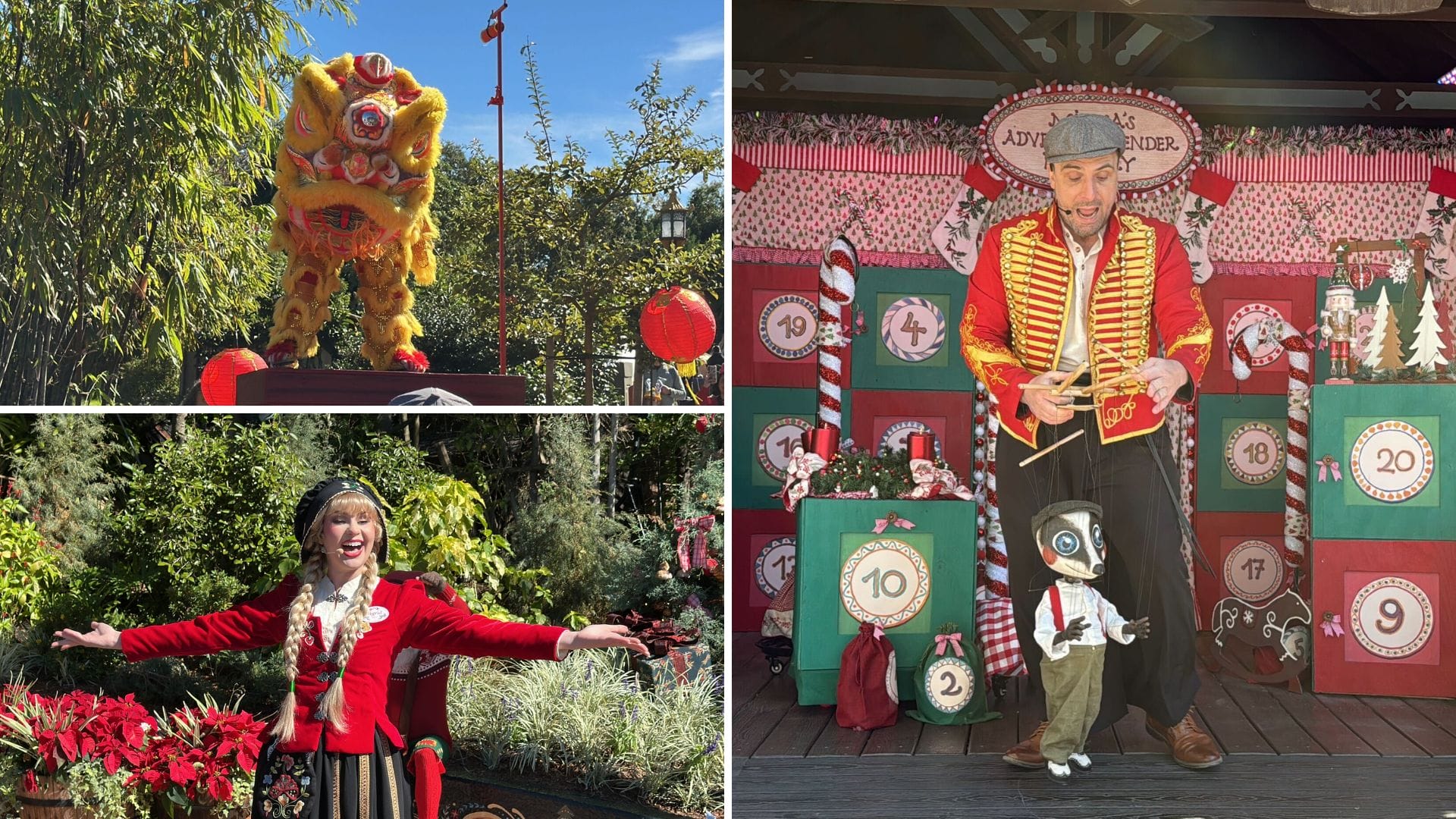
Learn about worldwide holiday traditions and stories with the Holiday Storytellers at the EPCOT International Festival of the Holidays. These storytellers perform throughout World Showcase for the duration of the festival, which runs through December 30. Most are returning but there is a new puppet show at the Germany pavilion.
Festival of the Holidays Storytellers
- Mexico Pavilion – Las Posadas Celebration
- Norway Pavilion – A Mischievous Magical Barn Santa
- China Pavilion – Si-Zhu Trio & Chinese Lion Dancer
- Germany Pavilion – Adventskalender
- Italy Pavilion – La Befana
- Japan Pavilion – Daruma Storyteller
- Between Morocco and France Pavilions – Hanukkah Storyteller
- France Pavilion – Père Noël
- United Kingdom Pavilion – Father Christmas
- Canada Pavilion – Canadian Holiday Voyageurs
Mexico Pavilion – Las Posadas Celebration
¡Feliz Navidad! Join the fun and pageantry of Las Posadas with dancers, piñatas and the music of Mariachi Cobre.

Mariachi Cobre joins the storytellers in the Las Posadas Celebration, performed next to La Cantina de San Angel. The dancers act out the story of Mary and Joseph searching for a place to stay, accompanied by music from the mariachi band.
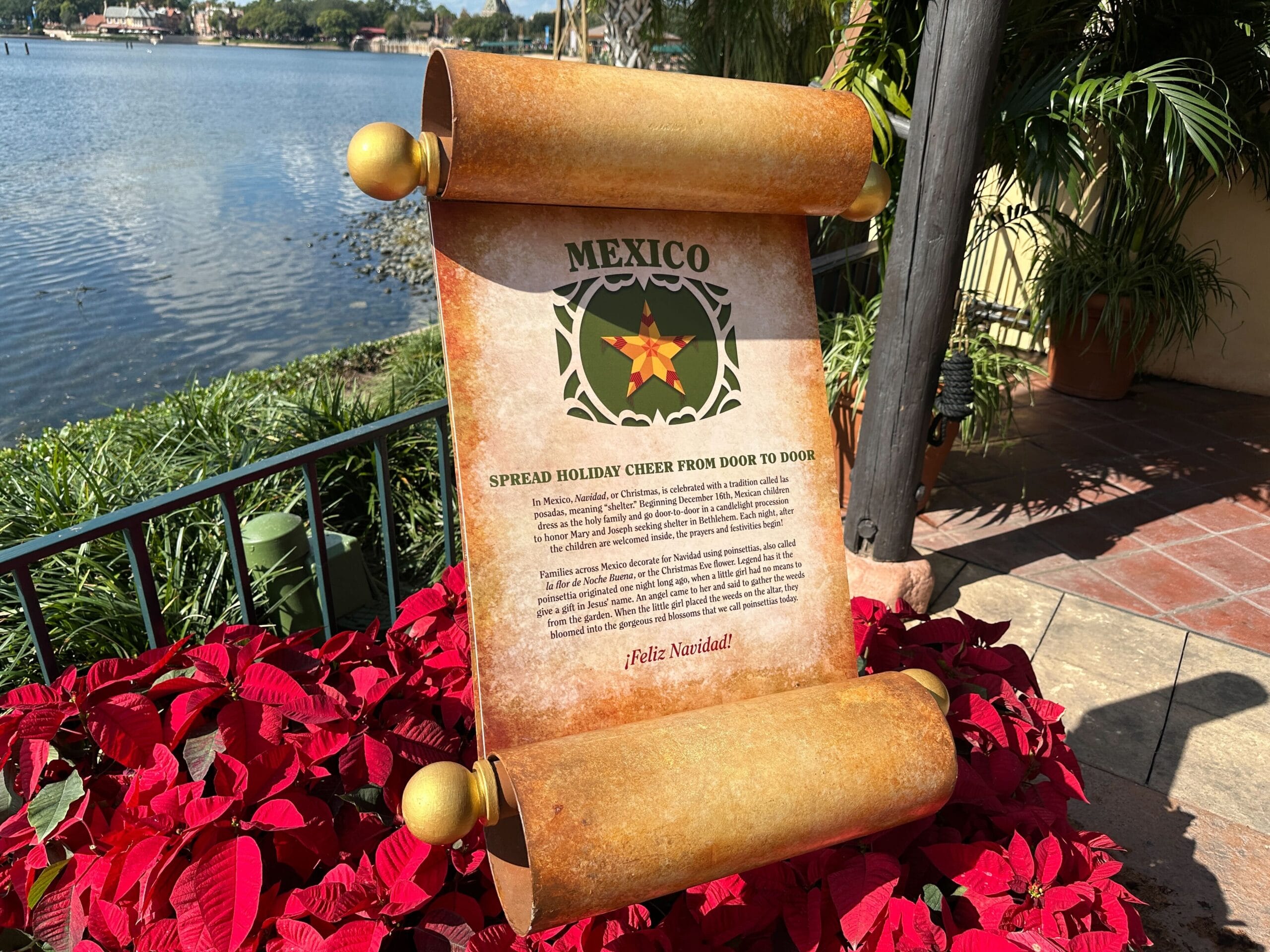
Spread Holiday Cheer from Door to Door
In Mexico, Navidad, or Christmas, is celebrated with a tradition called las posadas, meaning “shelter.” Beginning December 16th, Mexican children dress as the holy family and go door-to-door in a candlelight procession to honor Mary and Joseph seeking shelter in Bethlehem. Each night, after the children are welcomed inside, the prayers and festivities begin!
Families across Mexico decorate for Navidad using poinsettias, also called la flor de Noche Buena, or the Christmas Eve flower. Legend has it the poinsettia originated one night long ago, when a little girl had no means to give a gift in Jesus’ name. An angel came to her and said to gather the weeds from the garden. When the little girl placed the weeds on the altar, they bloomed into the gorgeous red blossoms that we call poinsettias today.
¡Feliz Navidad!
The Las Posadas Celebration is performed Sundays through Thursdays at the following times:
- 11:05 a.m.
- 12 p.m.
- 12:50 p.m.
- 2:35 p.m.
- 3:40 p.m.
- 5:15 p.m.
Check out our video of a past performance here:
Norway Pavilion – A Mischievous Magical Barn Santa
Celebrate the season with laughter as a mischievous Barn Santa visits Sigrid, an unsuspecting Christmas storyteller.
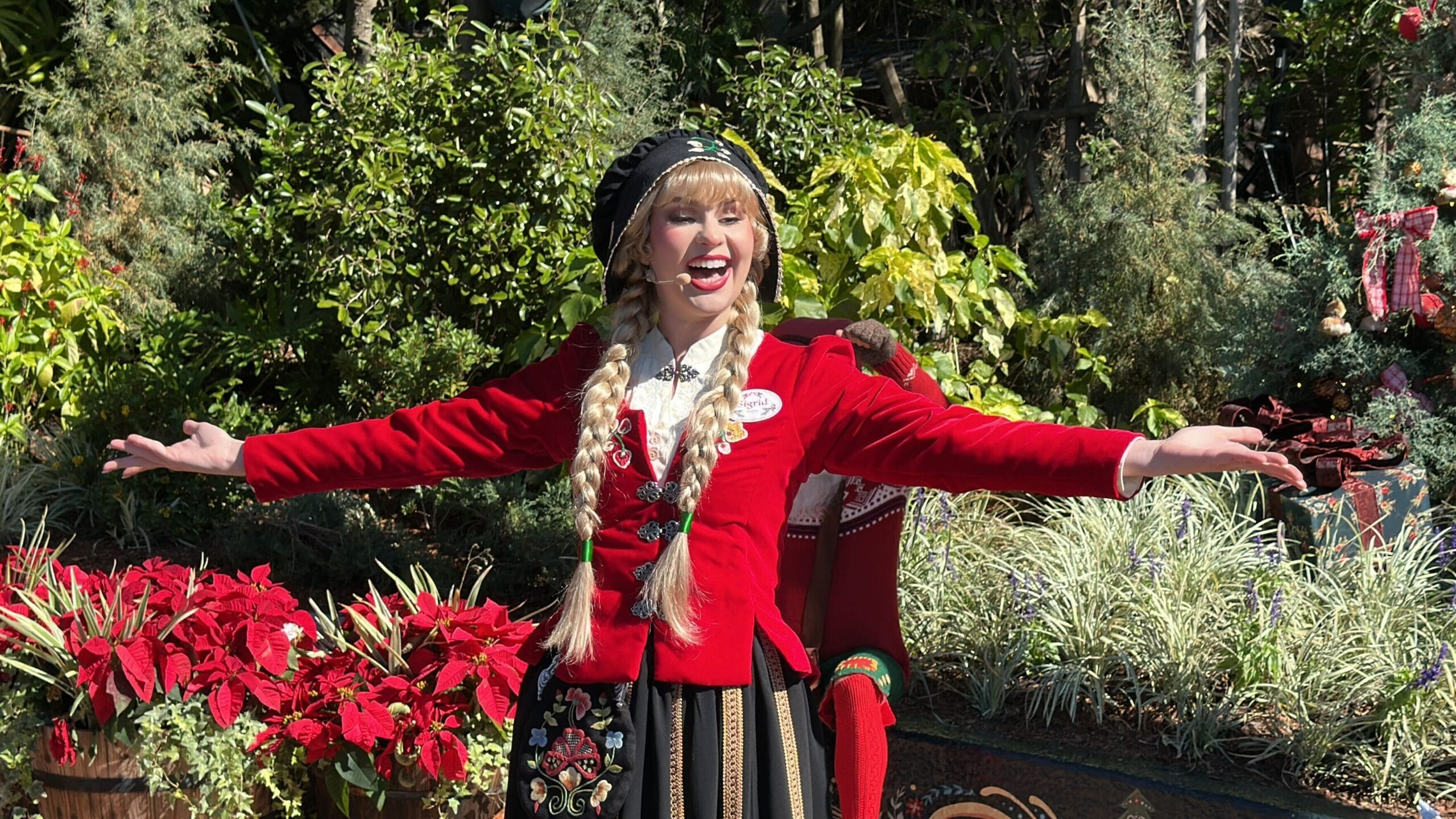
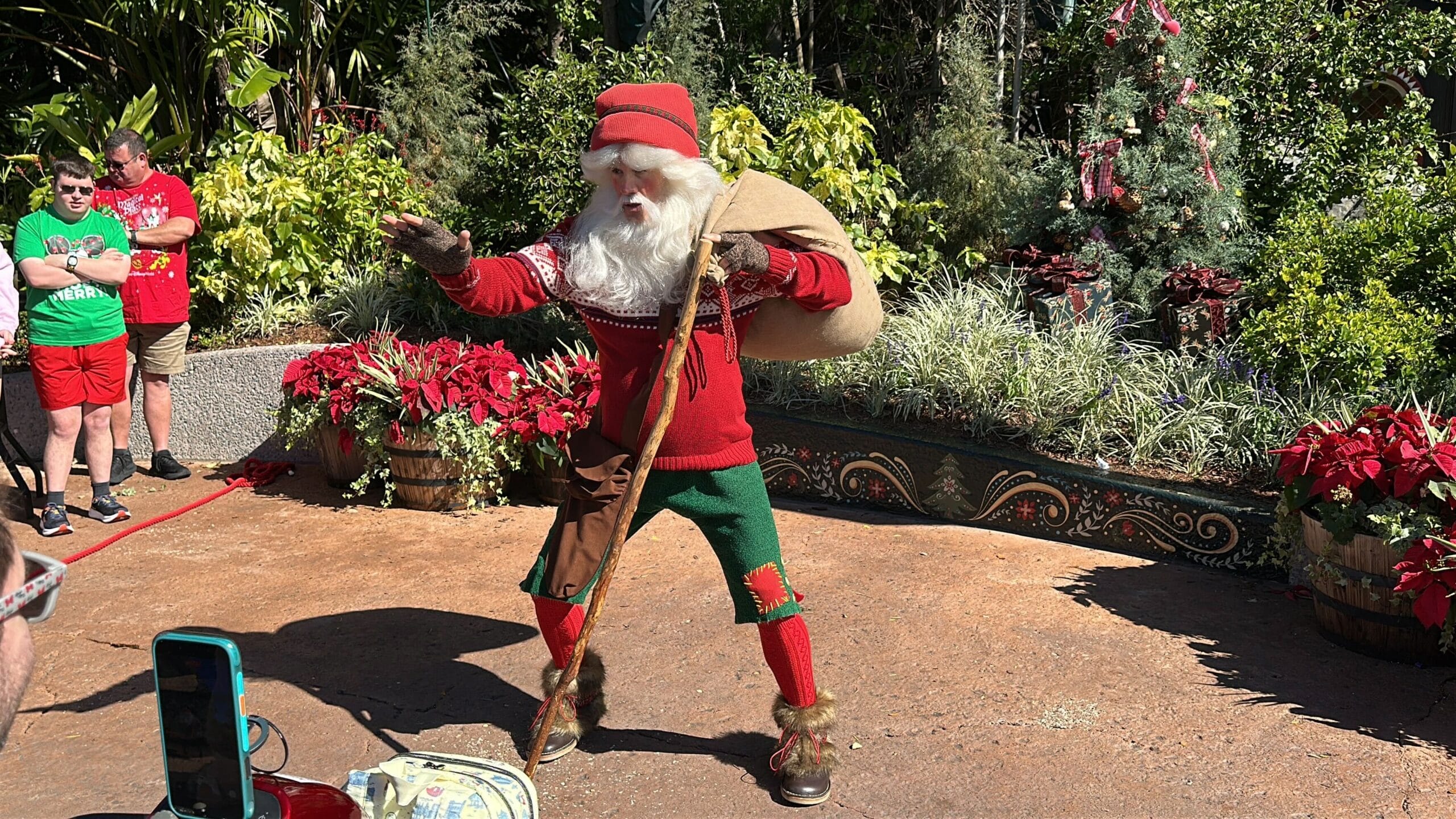
Over at the Norway Pavilion, Sigrid talks about her holiday traditions growing up on a farm. Even though Sigrid is skeptical that the Barn Santa exists, he shows up to the performance to work his magic and help her through her presentation.
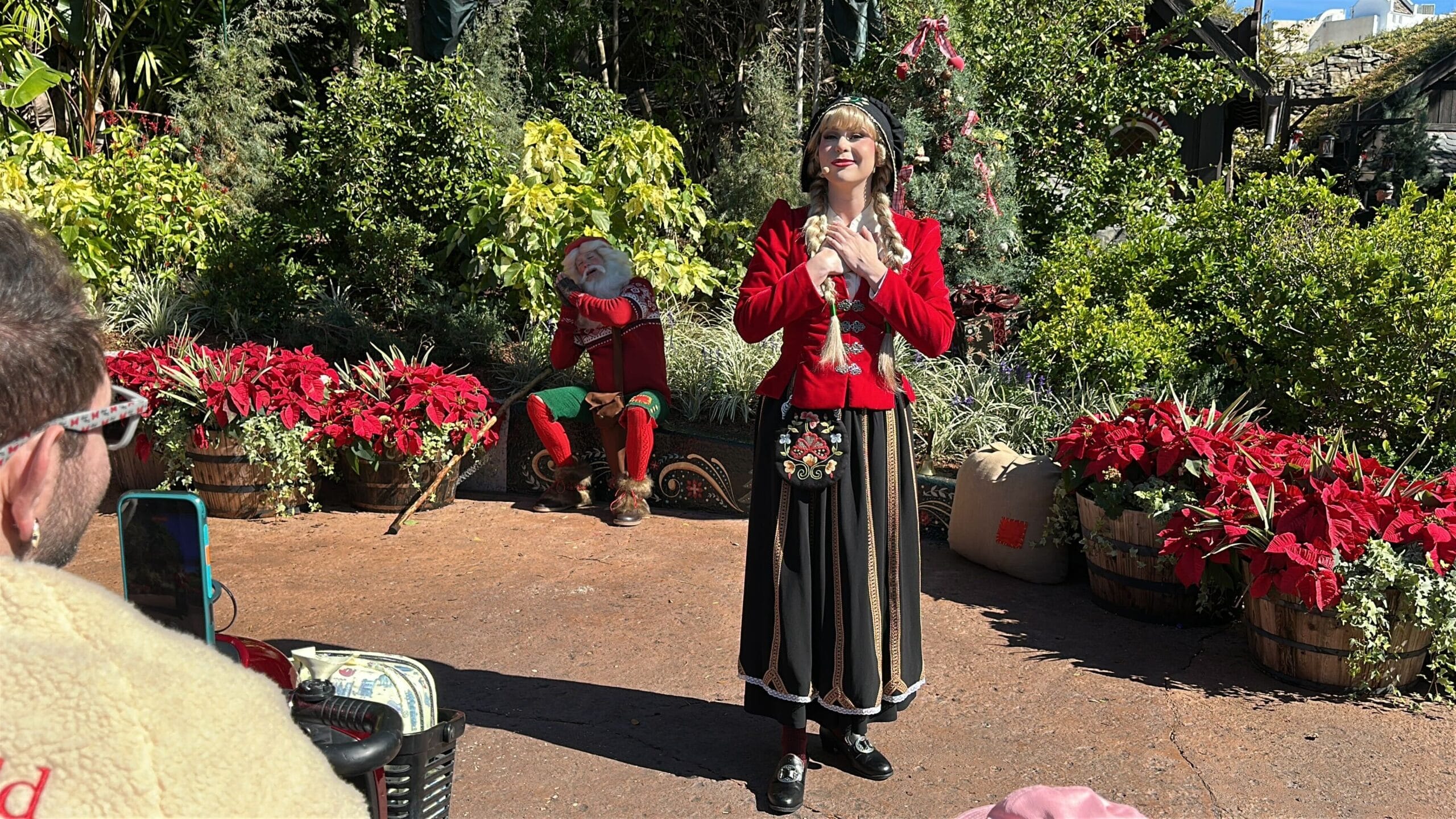
This year, the Norway Holiday Storytellers are performing in a different space due to construction where their stage usually is. They are nearby, outside Anna and Elsa’s Royal Sommerhus.
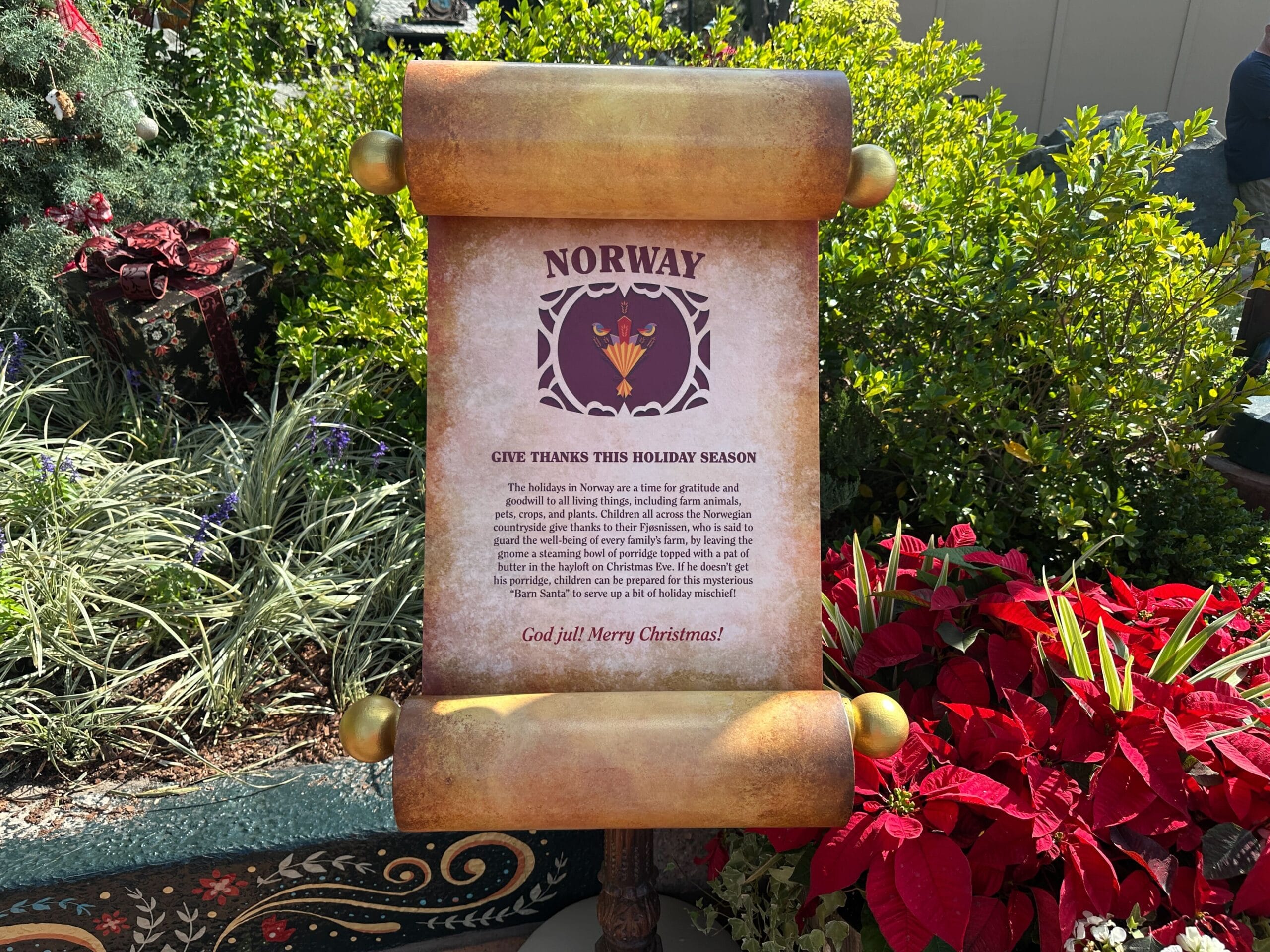
Give Thanks This Holiday Season
The holidays in Norway are a time for gratitude and goodwill to all living things, including farm animals, pets, crops, and plants. Children all across the Norwegian countryside give thanks to their Fjønissen, who is said to guard the well-being of every family’s farm, by leaving the gnome a steaming bowl of porridge topped with a pat of butter in the hayloft on Christmas Eve. If he doesn’t get his porridge, children can be prepared for this mysterious “Barn Santa” to serve up a bit of holiday mischief!
God jul! Merry Christmas!
Sigrid and the mischievous Barn Santa perform daily at these showtimes:
- 11:40 a.m.
- 12:30 p.m.
- 1:25 p.m.
- 2:15 p.m.
- 4:10 p.m.
- 4:55 p.m.
- 5:45 p.m.
- 6:30 p.m.
Check out our video of a past year’s performance here:
China Pavilion – Si-Zhu Trio & Chinese Lion Dancer

There are two alternating performances at the China pavilion.
Welcoming The Lunar New Year
In China, the winter season culminates with the arrival of Chinese New Year, also known as Lunar New Year or Spring Festival. For more than 2,000 years, the end of the Lunar calendar has been observed and celebrated with many time-honored traditions. These holiday rituals may include a top-to-bottom house cleaning, family reunions, remembering ancestors, festive meals, and sharing stories. Businesses and homes also welcome traditional lion dancers, who ward off the negative spirits of the past and spread the prospects of vitality, health, and prosperity.
The Chinese New Year is also celebrated with an abundance of the color red. In Chinese culture, red is believed to be a lucky symbol of strength and good fortune. Families may dress in festive red clothing, hang red lanterns, and create red jianzhi—or paper cutouts—to decorate their living areas. They even offer hong bao, red paper envelopes that often contain lucky money or small gifts.
Gung hay fat choy! Wishing you great happiness and prosperity!
Si-Zhu Trio
Celebrate the Lunar New Year with traditional Chinese folk music played by renowned musicians.

The Si-Zhu Trio will perform at noon, 1:00 p.m., 2:00 p.m., 3:00 p.m., and 4:00 p.m. on the following dates:
- December 1 through December 5
- December 8 through December 12
- December 15 through December 18
Watch our video of their full 2024 performance below:
Chinese Lion Dancer
Catch a glimpse of this colorful performance that brings good fortune and happiness in the Lunar New Year.
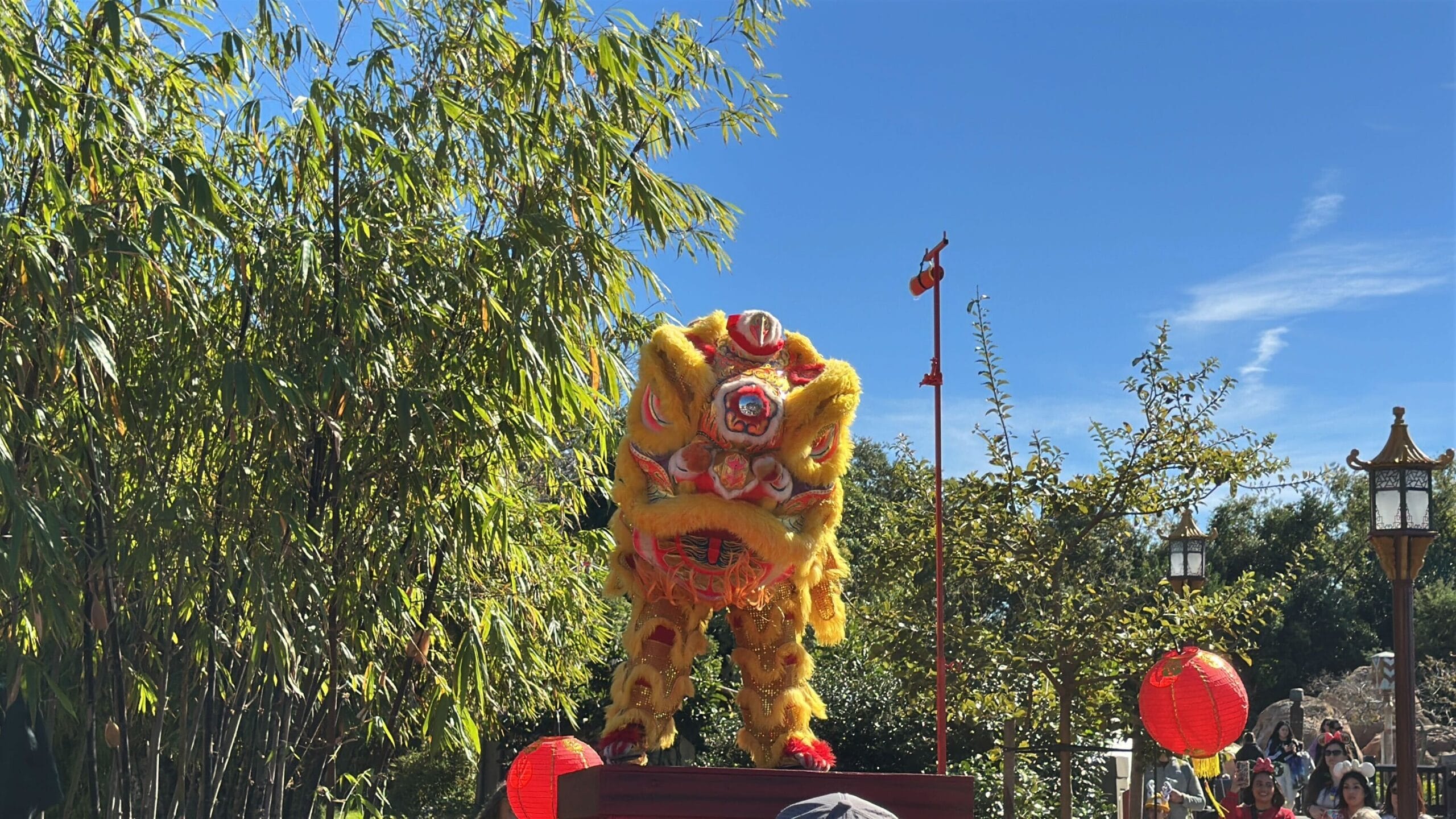
To celebrate Lunar New Year, a traditional lion dance is performed as a narrator tells the story of the lion. This year’s lion is yellow and red.
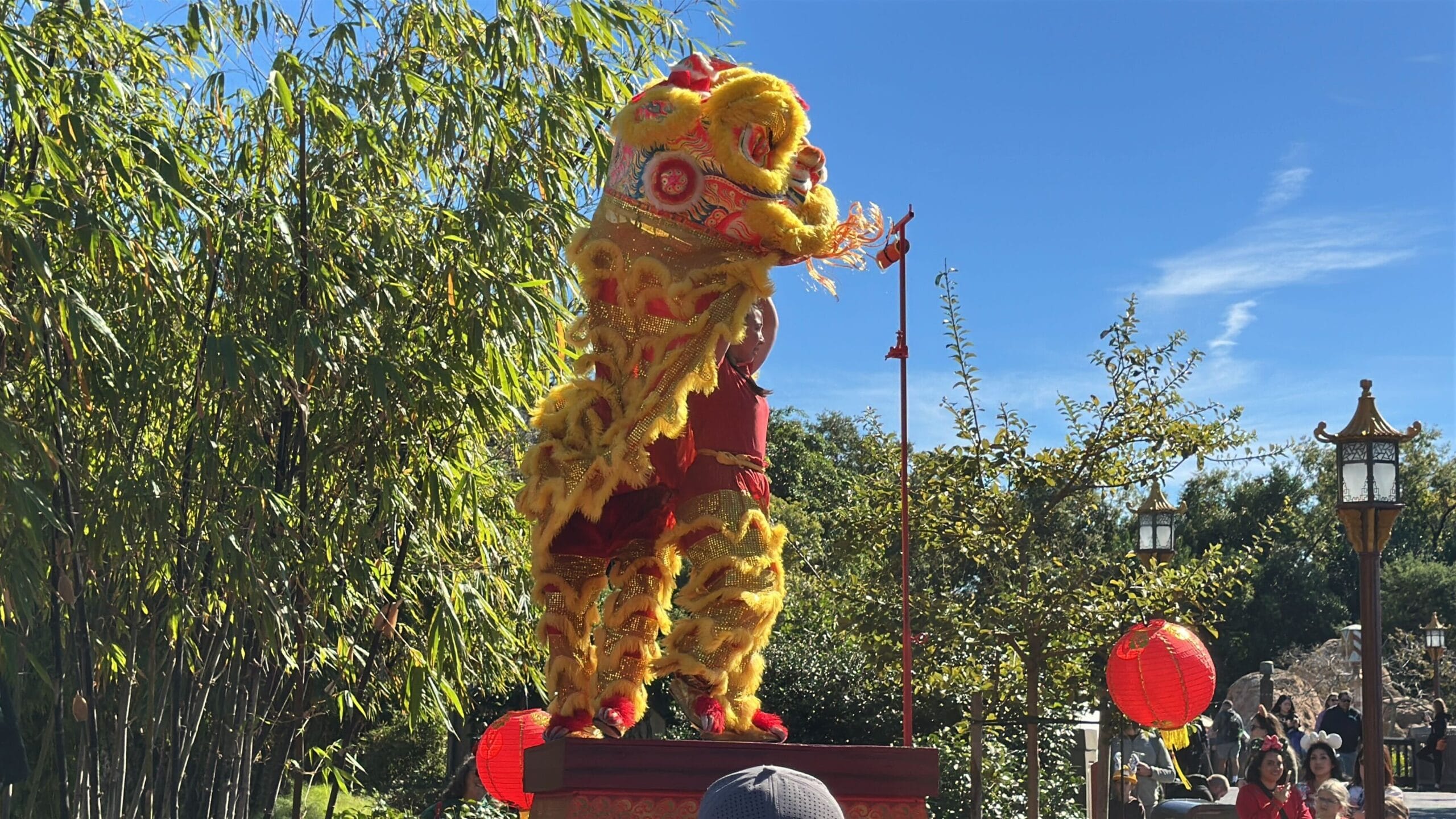
The Chinese Lion Dancer performs at noon, 1:00 p.m., 2:00 p.m., 3:00 p.m., and 4:00 p.m. on these dates:
- November 28 through November 30
- December 6 and 7
- December 13 and 14
- December 19 through December 25
Check out our video of a past year’s performance here:
Germany Pavilion – Adventskalender
Explore German holiday traditions brought to life in Micha’s Adventskalender Puppetry—a magical puppet theatre adventure for the whole family!
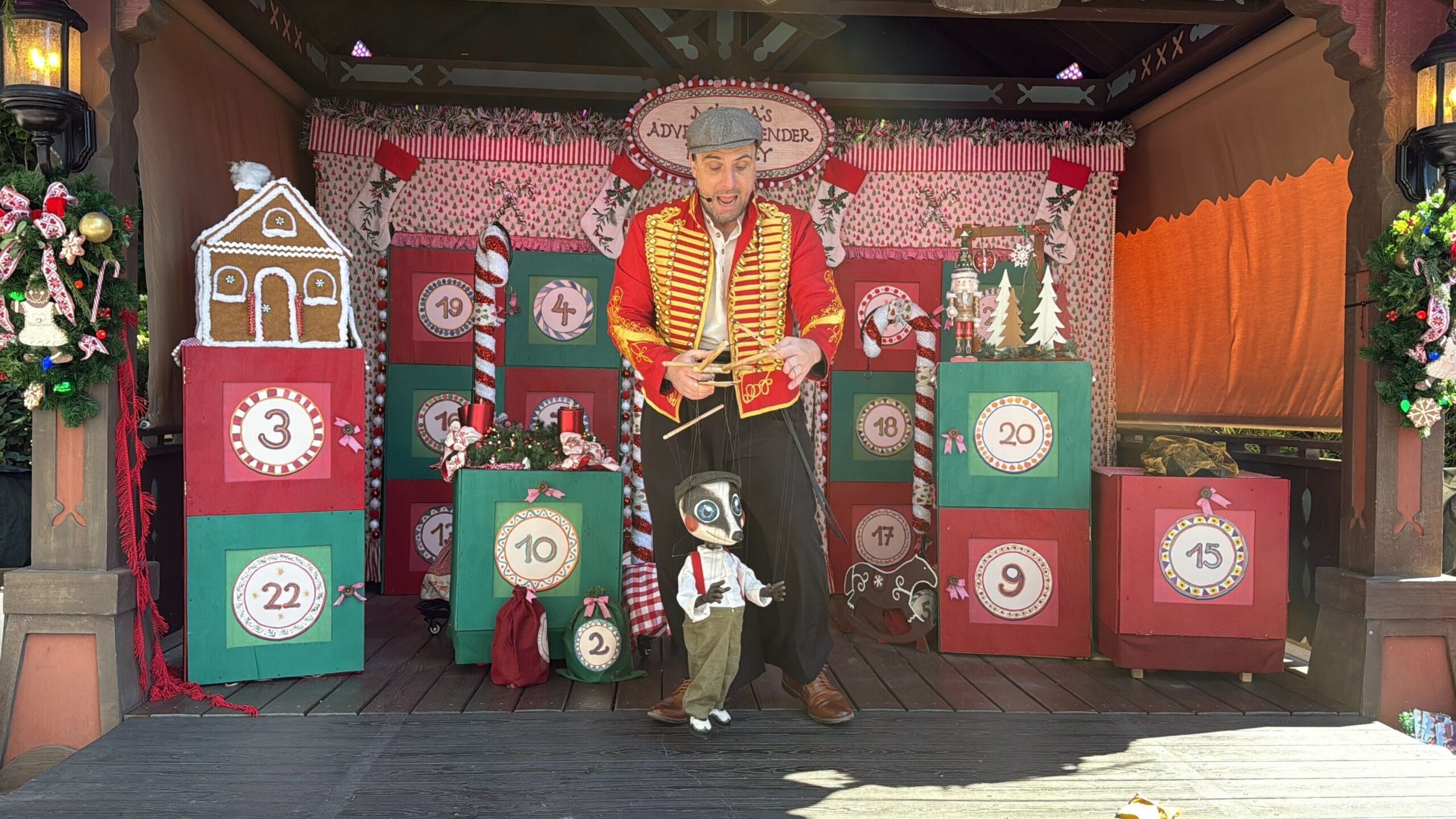
The Germany pavilion features different entertainment each year and this year introduces Micha’s Adventskalender Puppetry, which explores the history of the advent calendar through puppets. They perform on the pavilion’s stage next to the Bavaria Holiday Kitchen.
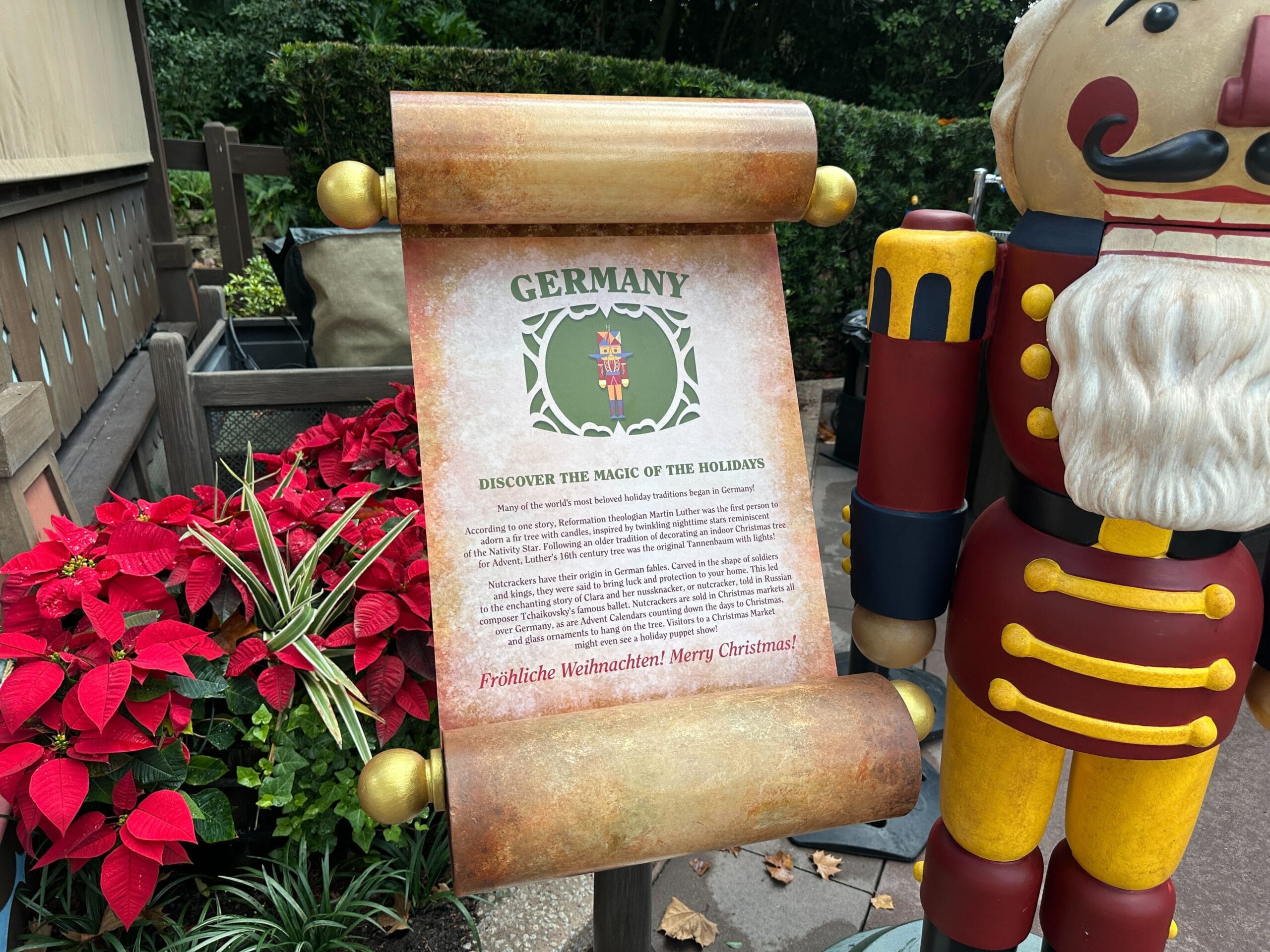
Discover the Magic of the Holidays
Many of the world’s most beloved holiday traditions began in Germany!
According to one story, Reformation theologian Martin Luther was the first person to adorn a fir tree with candles, inspired by twinkling nighttime stars reminiscent of the Nativity Star. Following an older tradition of decorating an indoor Christmas tree for Advent, Luther’s 16th century tree was the original Tannenbaum with lights!
Nutcrackers have their origin in German fables. Carved in the shape of soldiers and kings, they were said to bring luck and protection to your home. This led to the enchanting story of Clara and her nussknacker, or nutcracker, told in Russian composer Tchaikovsky’s famous ballet. Nutcrackers are sold in Christmas markets all over Germany, as are Advent Calendars counting down the days to Christmas, and glass ornaments to hang on the tree. Visitors to a Christmas Market might even see a holiday puppet show!
Fröhliche Weihnachten! Merry Christmas!
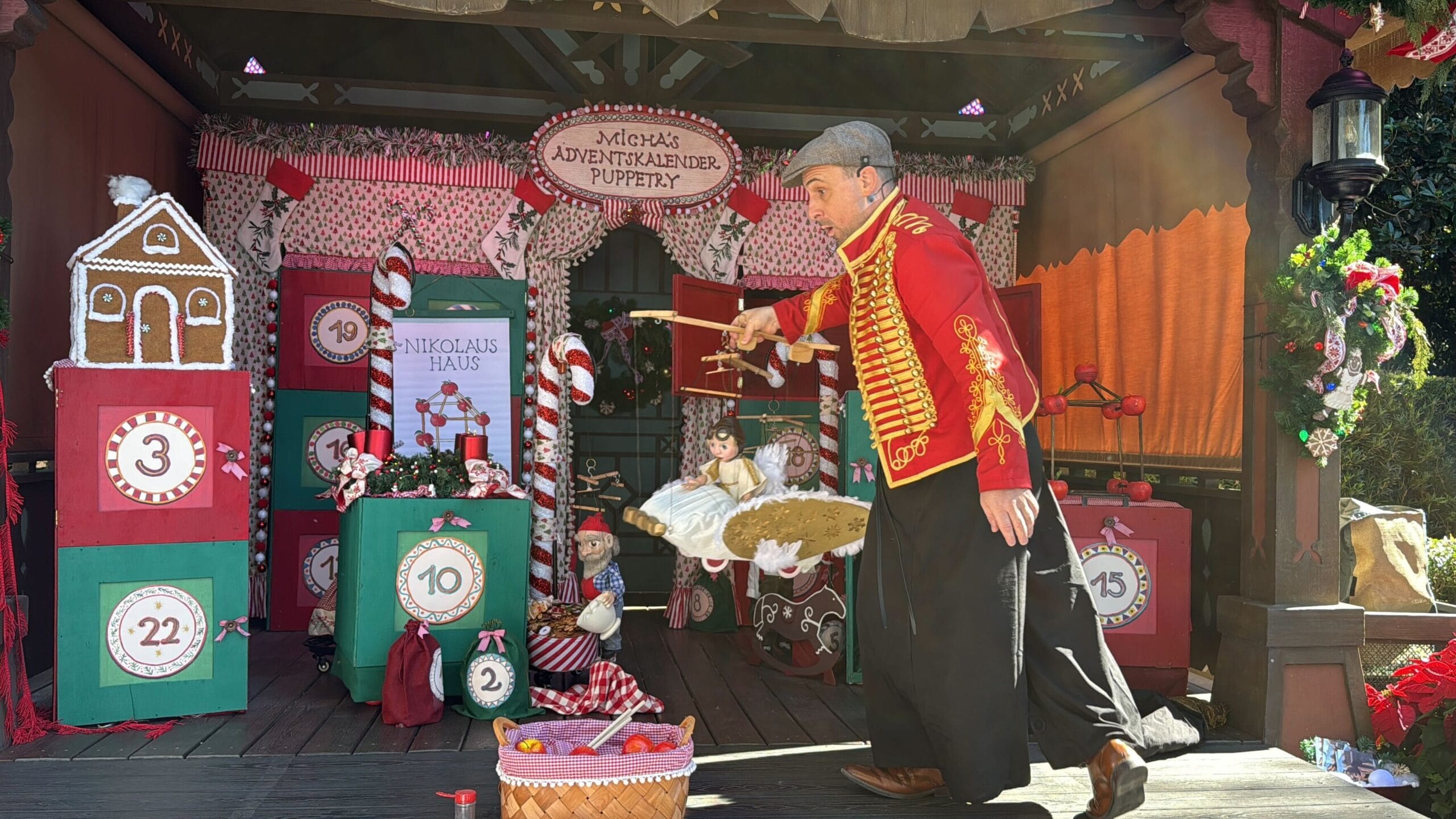
The puppet show is Fridays through Tuesdays at the following times:
- 12:40 p.m.
- 1:30 p.m.
- 2:35 p.m.
- 3:55 p.m.
- 5:00 p.m.
- 6:05 p.m.
Watch our video of the new show below.
Italy Pavilion – La Befana
Come hear the tale of La Befana, the kindhearted witch who visits sleeping young children on the Eve of the Epiphany.

The Christmas witch La Befana tells her story about the Eve of the Epiphany in January. She performs on the stage in the center of the Italy pavilion.
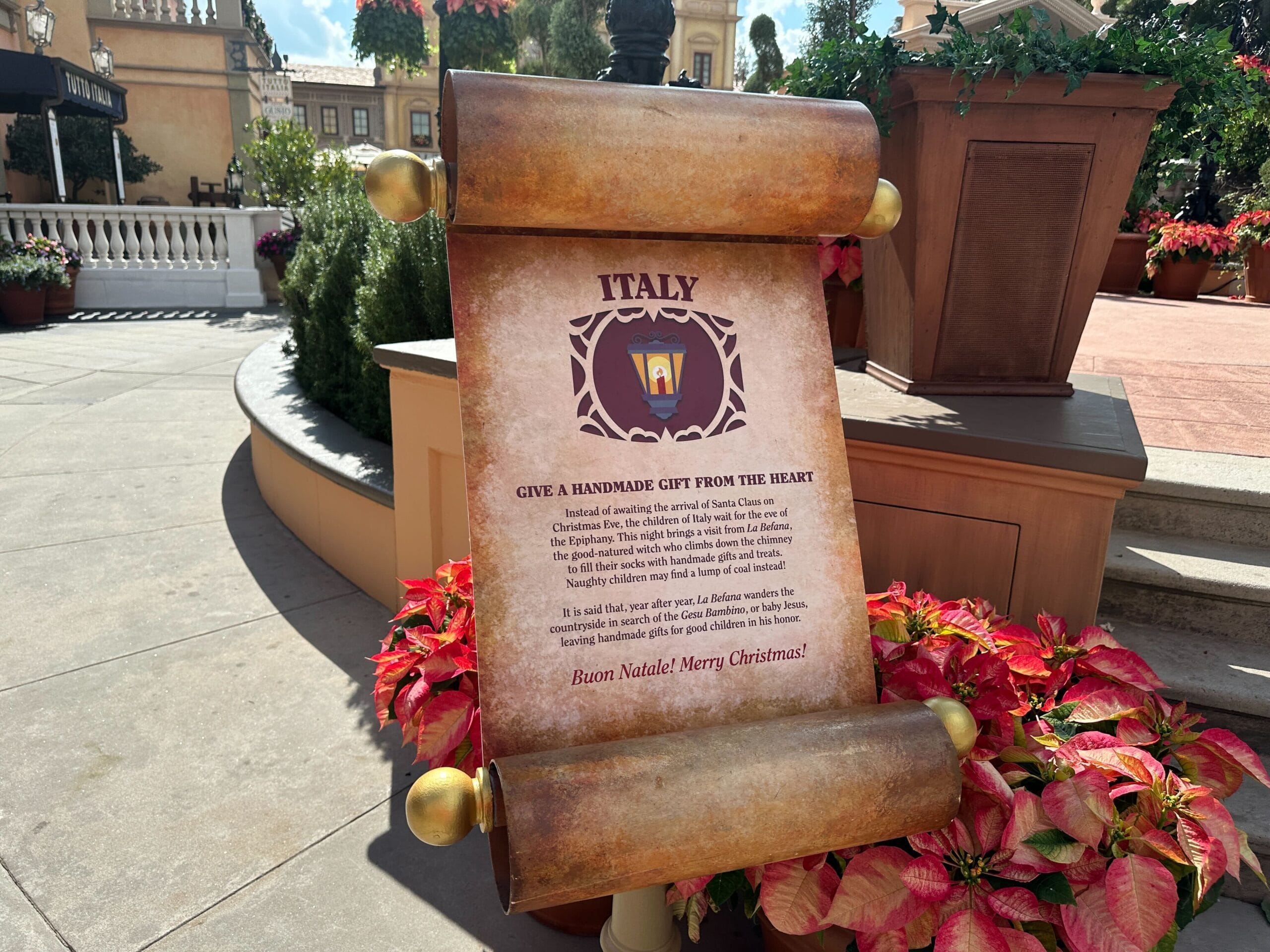
Give a Handmade Gift from the Heart
Instead of awaiting the arrival of Santa Claus on Christmas Eve, the children of Italy wait for the eve of the Epiphany. This night brings a visit from La Befana, the good-natured witch who climbs down the chimney to fill their socks with handmade gifts and treats. Naughty children may find a lump of coal instead!
It is said that, year after year, La Befana wanders the countryside in search of the Gesu Bambino, or baby Jesus, leaving handmade gifts for good children in his honor.
Buon Natale! Merry Christmas!
La Befana appears daily at the following showtimes:
- 11:15 a.m.
- 12:15 p.m.
- 1:00 p.m.
- 1:55 p.m.
- 3:30 p.m.
- 4:15 p.m.
- 5:00 p.m.
- 5:40 p.m.
Check out our video of a past year’s performance here:
Japan Pavilion – Daruma Storyteller
Hear the fascinating story of the Daruma doll and the Japanese customs of the new year!

The Japan pavilion storyteller talks about the Daruma doll and how the nation traditionally welcomes the new year. She performs in front of the pavilion’s pagoda.
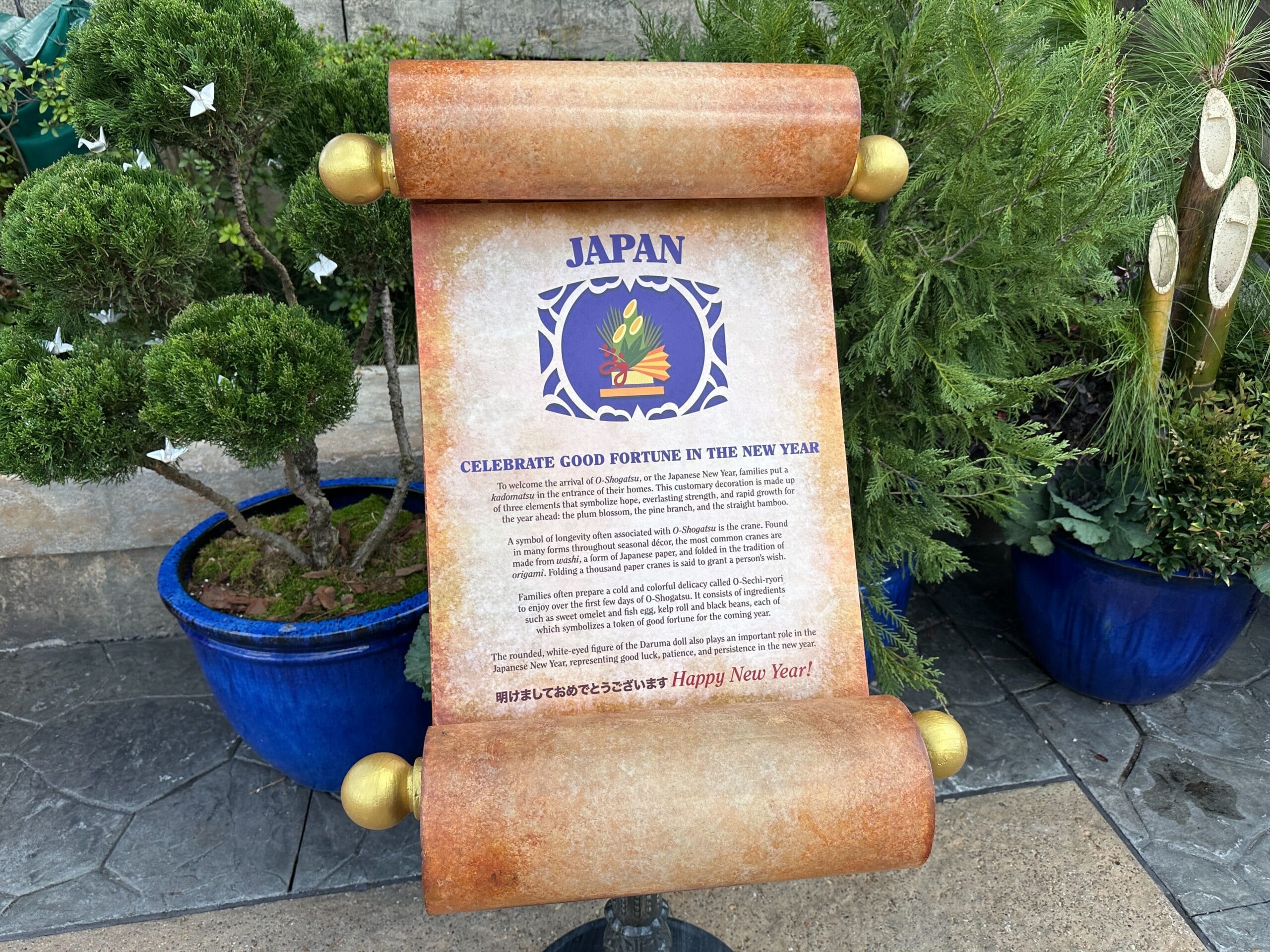
Celebrate Good Fortune in the New Year
To welcome the arrival of O-Shogatsu, or the Japanese New Year, families put a kadomatsu in the entrance of their homes. This customary decoration is made up of three elements that symbolize hope, everlasting strength, and rapid growth for the year: the plum blossom, the pine branch, and the straight bamboo.
A symbol of longevity often associated with O-Shogatsu is the crane. Found in many forms throughout seasonal décor, the most common cranes are made from washi, a form of Japanese paper, and folded in the tradition of origami. Folding a thousand paper cranes is said to grant a person’s wish.
Families often prepare a cold and colorful delicacy called O-Sechi-ryori to enjoy over the first few days of O-Shogatsu. It consists of ingredients such as sweet omelet and fish egg, kelp roll and black beans, each of which symbolizes a token of good fortune for the coming year.
The rounded, white-eyed figure of the Daruma doll also plays an important role in the Japanese New Year, representing good luck, patience, and persistence in the new year.
Happy New Year!
The Daruma Storyteller performs daily at these times:
- 10:45 a.m.
- 11:45 a.m.
- 12:45 p.m.
- 1:35 p.m.
- 2:35 p.m.
- 4:15 p.m.
- 5:00 p.m.
- 5:45 p.m.
Check out our video of a past year’s performance here:
Between Morocco and France Pavilions – Hanukkah Storyteller
Guests will discover an entertaining celebration of Hanukkah along World Showcase promenade, where a storyteller recounts traveling abroad to explore the diverse music and traditions of Hanukkah around the world.

In Hanukkah, a musician tells the story of the Jewish festival of lights and symbols of the holiday like the hanukiah a.k.a. menorah and the game of dreidel. This stage is next to the L’Chaim! Holiday Kitchen.
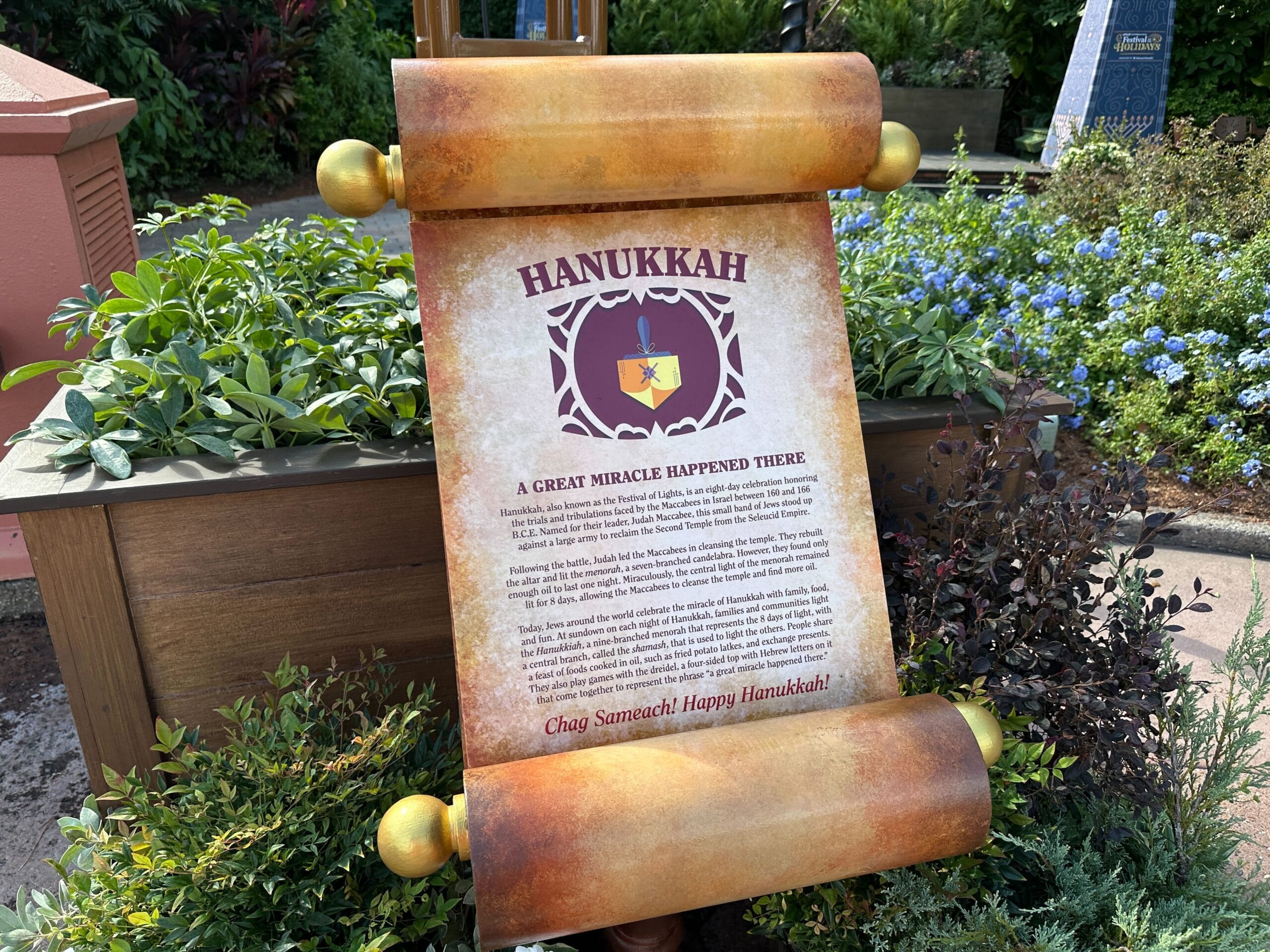
A Great Miracle Happened There
Hanukkah, also known as the Festival of Lights, is an eight-day celebration honoring the trials and tribulations faced by the Maccabees in Israel between 160 and 166 B.C.E. Named for their leader, Judah Maccabee, this small band of Jews stood up against a large army to reclaim the Second Temple from the Seleucid Empire.
Following the battle, Judah led the Maccabees in cleansing the temple. They rebuilt the altar and lit the menorah, a seven-branched candelabra. However, they found only enough oil to last one night. Miraculously, the central light of the menorah remained lit for 8 days, allowing the Maccabees to cleanse the temple and find more oil.
Today, Jews around the world celebrate the miracle of Hanukkah with family, food, and fun. At sundown on each night of Hanukkah, families and communities light the Hanukkiah, a nine-branched menorah that represents the 8 days of light, with a central branch, called the shamash, that is used to light the others. People share a feast of foods cooked in oil, such as fried potato latkes, and exchange presents. They also play games with the dreidel, a four-sided top with Hebrew letters on it that come together to represent the phrase “a great miracle happened there.”
Chag Sameach! Happy Hanukkah!
The Hanukkah Storyteller performs daily at these times:
- 12:00 p.m.
- 1:00 p.m.
- 1:50 p.m.
- 2:50 p.m.
- 3:45 p.m.
- 5:05 p.m.
- 5:50 p.m.
- 6:30 p.m.
Check out our video of a past year’s performance below.
France Pavilion – Père Noël
Visit with Père Noël and rediscover the magic of Christmas through the letter of a delightful child.

Père Noël (a version of Santa Claus) explains French Christmas traditions through a letter from a young child. He performs on a platform in front of the pavilion’s small maze garden.
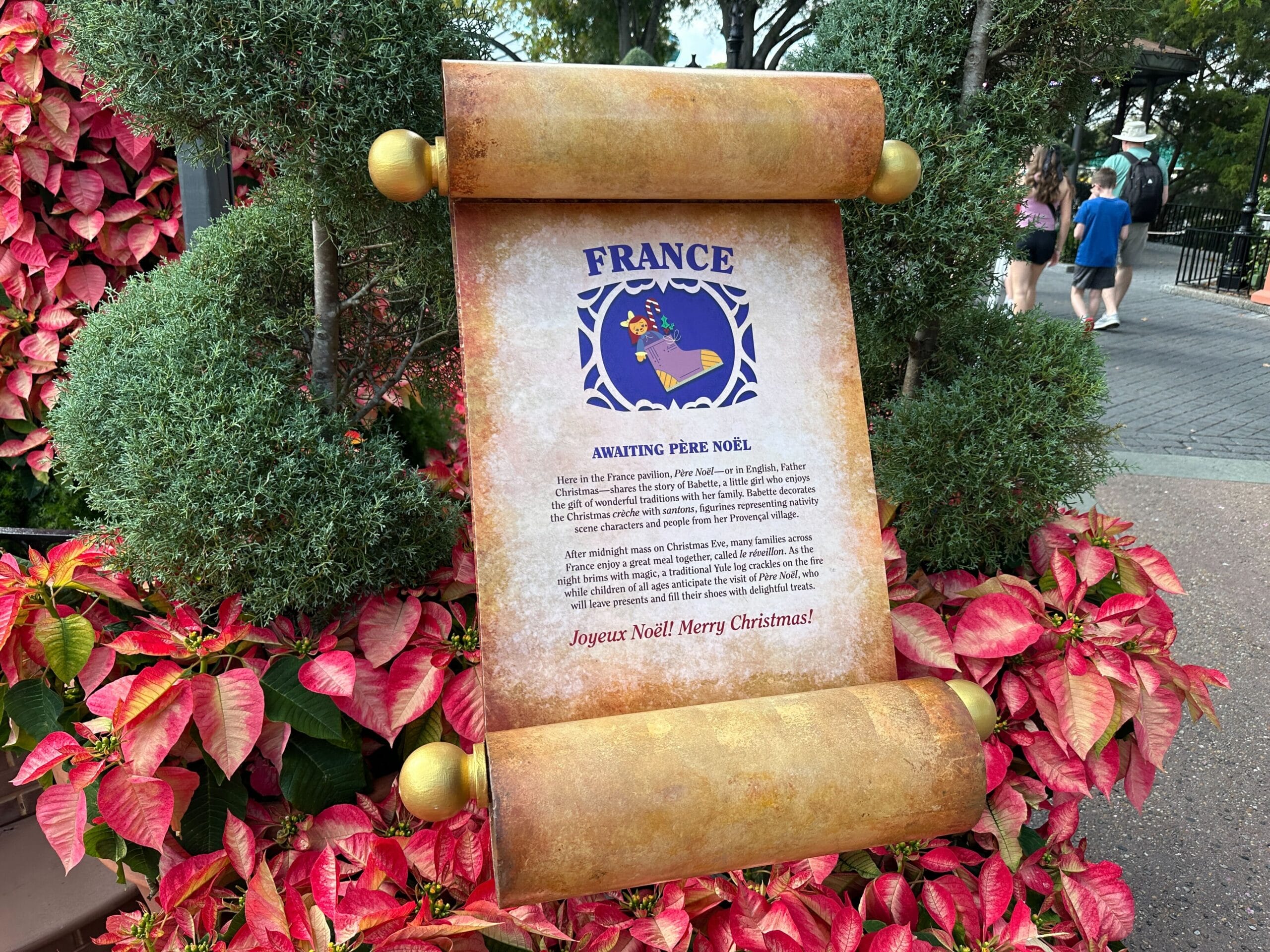
Awaiting Père Noël
Here in the France pavilion, Père Noël—or in English, Father Christmas—shares the story of Babette, a little girl who enjoys the gift of wonderful traditions with her family. Babette decorates the Christmas crèche with santons, figurines representing nativity scene characters and people from her Provençal village.
After midnight mass on Christmas Eve, many families across France enjoy a great meal together, called le réveillon. As the night brims with magic, a traditional Yule log crackles on the fire while children of all ages anticipate the visit of Père Noël, who will leave presents and fill their shoes with delightful treats.
Joyeaux Noël! Merry Christmas!
Père Noël performs daily at these showtimes:
- 10 a.m.
- 11:05 a.m.
- 12:10 p.m.
- 12:50 p.m.
- 2:20 p.m.
- 3:25 p.m.
- 4:30 p.m.
- 5:15 p.m.
Check out our video of a previous year’s performance below.
United Kingdom Pavilion – Father Christmas
Join Father Christmas as he rings in the season, sharing the traditions of the United Kingdom and good cheer.

Another version of Santa Claus is Father Christmas, clad in a green suit and a wreath of holly on his head. He discusses holiday traditions that originated in the United Kingdom including Christmas cards, mistletoe, and the song “Deck the Halls.” Guests can find him near the gazebo at the back of the U.K. pavilion.
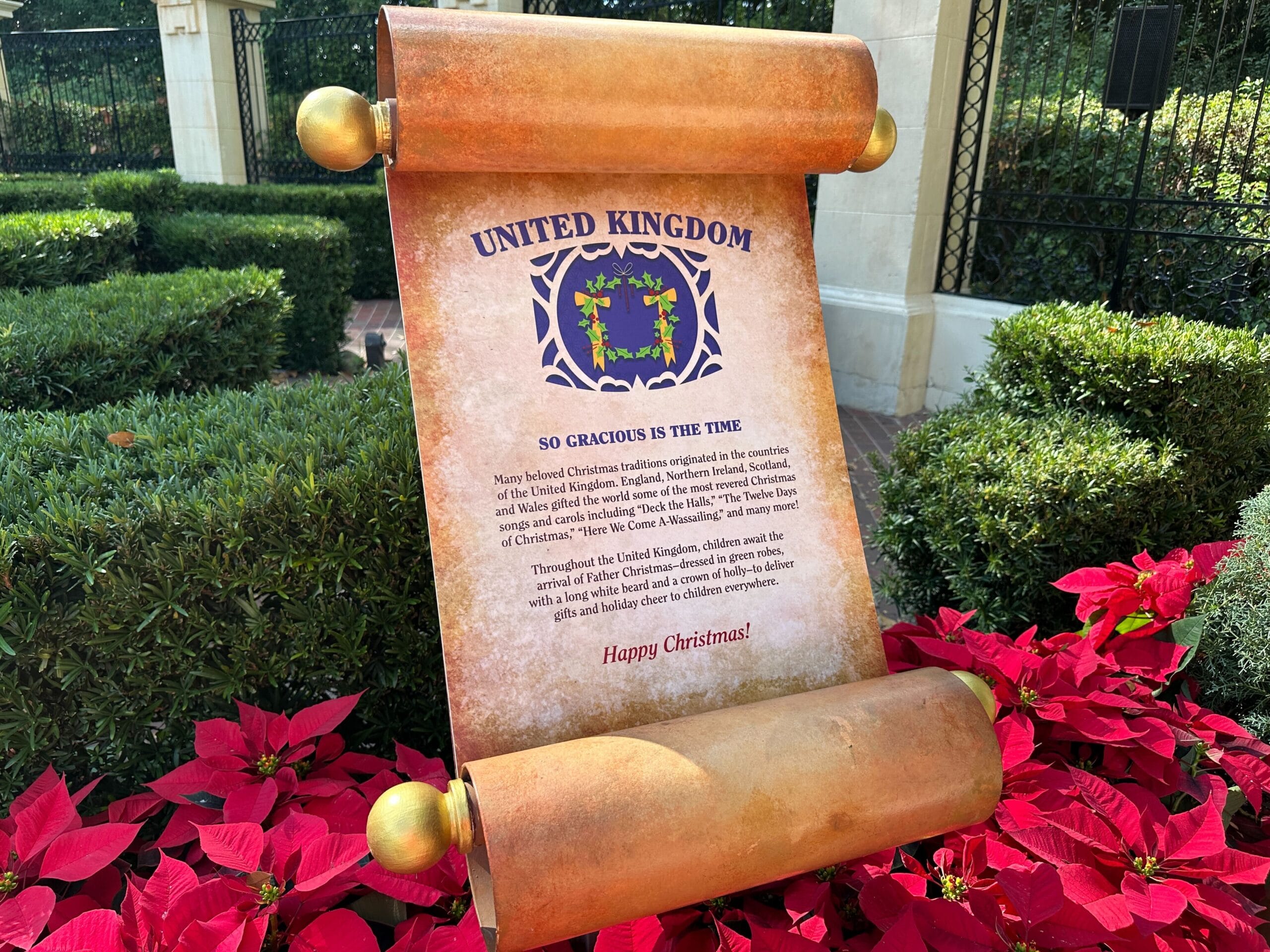
So Gracious is the Time
Many beloved Christmas traditions originated in the countries of the United Kingdom. England, Northern Ireland, Scotland, and Wales gifted the world some of the most revered Christmas songs and carols including “Deck the Halls,” “The Twelve Days of Christmas,” “Here We Come A-Wassailing,” and many more!
Throughout the United Kingdom, children await the arrival of Father Christmas—dressed in green robes, with a long white beard and a crown of holly—to deliver gifts and holiday cheer to children everywhere.
Happy Christmas!
Father Christmas performs daily at these times:
- 11:45 a.m.
- 12:30 p.m.
- 1:20 p.m.
- 2:05 p.m.
- 3:50 p.m.
- 4:45 p.m.
- 5:35 p.m.
- 6:30 p.m.
Check out our video of a past year’s performance below.
Canada Pavilion – Canadian Holiday Voyageurs
Explore holiday customs from the various regions of Canada on a musical tour of the Great White North with the Canadian Holiday Voyageurs.

The Canadian Holiday Voyageurs perform holiday songs on The Mill Stage, next to the Canada pavilion.
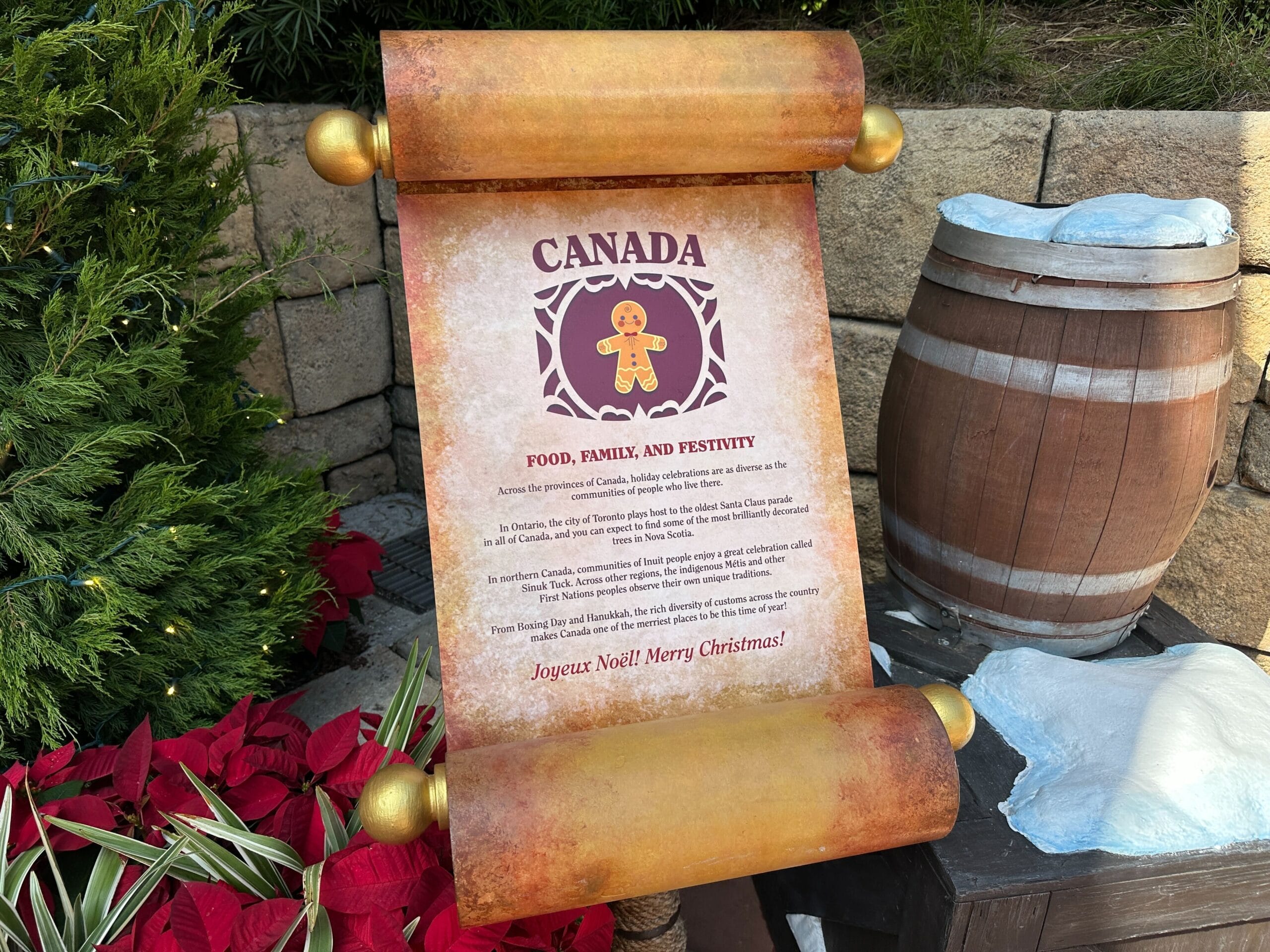
Food, Family, and Festivity
Across the provinces of Canada, holiday celebrations are as diverse as the communities of people who live there.
In Ontario, the city of Toronto plays host to the oldest Santa Claus parade in all of Canada, and you can expect to find some of the most brilliantly decorated trees in Nova Scotia.
In northern Canada, communities of Inuit people enjoy a great celebration called Sinuk Tuck. Across other regions, the indigenous Métis and other First Nations peoples observe their own unique traditions.
From Boxing Day and Hanukkah, the rich diversity of customs across the country makes Canada one of the merriest places to be this time of year!
Joyeaux Noël! Merry Christmas!
The band performs daily at these times:
- 3:25 p.m.
- 4:35 p.m.
- 5:35 p.m.
- 6:40 p.m.
- 7:40 p.m.
- 8:40 p.m.
Check out our video of a past year’s performance below.
Which holiday storyteller is your favorite at the 2025 EPCOT International Festival of the Holidays? Let us know in the comments or on social media.
For the latest Disney Parks news and info, follow WDW News Today on Twitter, Facebook, and Instagram.